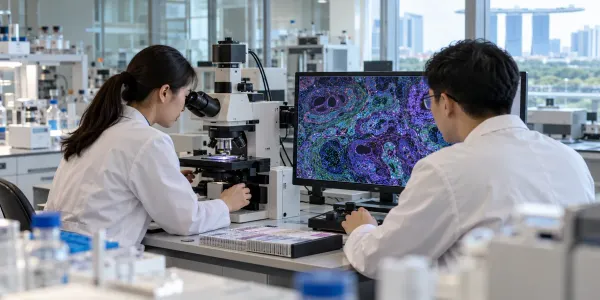
Novo Brings Claude Into Drug Discovery and Development
Novo is testing Anthropic’s Claude on biological reasoning and drug-development workflows, extending AI from documentation into scientific infrastructure while putting data governance, validation and human oversight under scrutiny.

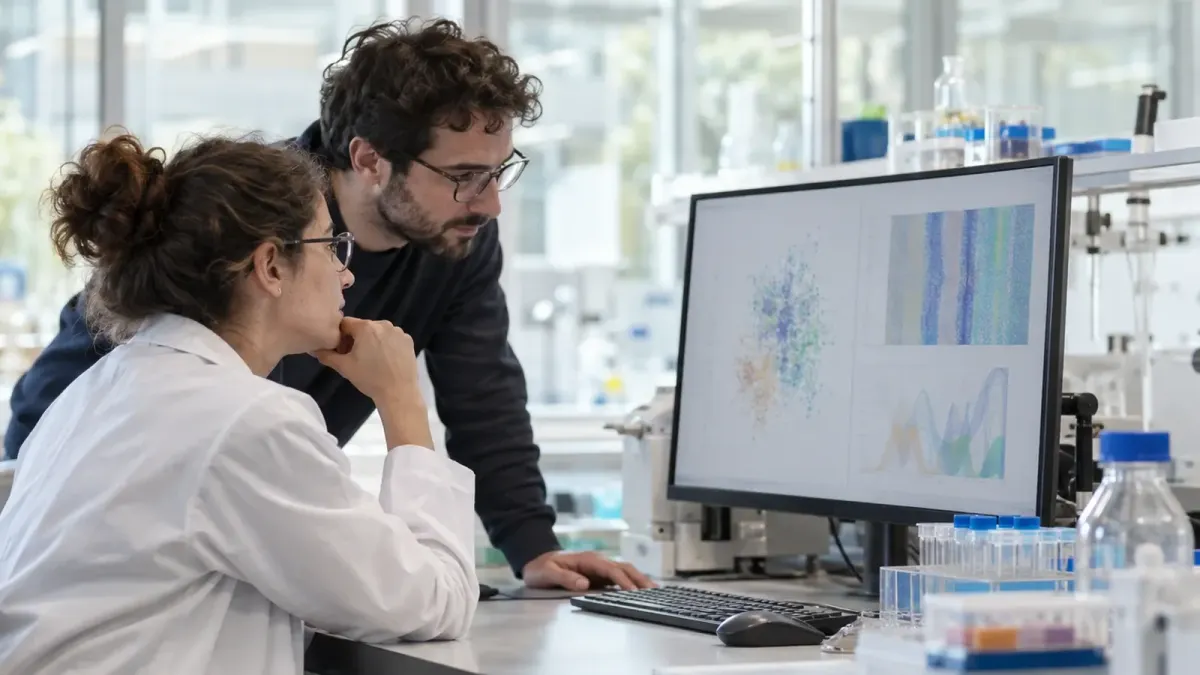
Novo Nordisk is moving Anthropic’s Claude from document automation into the scientific core of drug development, testing the system on biological reasoning and selected research workflows while also using it to accelerate software engineering. The Danish drugmaker announced the collaboration on September 16, making it one of the clearest European examples yet of a pharmaceutical company treating a general-purpose AI model as research infrastructure rather than a stand-alone productivity tool.
The companies said they will jointly choose drug-discovery problems identified by Novo scientists and computational teams, then develop targeted AI-supported workflows around them. Novo’s announcement does not identify a disease program, a drug candidate or a financial commitment, and it presents the first phase as testing. That limits what can be claimed today: the agreement is consequential because of its scope, but it is not evidence that Claude has discovered a medicine or improved a clinical outcome.
It nevertheless marks a significant expansion of an existing relationship. Reuters reported that Novo already uses Claude to automate clinical-trial report generation and to reduce the preparation time for some patient documentation from months to minutes. The new work reaches further upstream, where scientists decide which biological mechanisms to pursue and which experiments or analyses merit scarce laboratory time.
From documentation to scientific reasoning
The collaboration has two linked tracks. In research and development, Novo plans to test Claude Science against specific workflows and scientific questions. In engineering, it will use Anthropic’s models to help build software, a necessary layer if experimental AI tools are to become repeatable services available across a large regulated company. The Journal reported that the deal is intended to support discovery, development and software work; commercial terms were not disclosed.
Claude’s life-sciences offering is designed to connect a language model with the systems where scientific evidence is stored and analyzed. Anthropic lists integrations with PubMed, Benchling, 10x Genomics, ChEMBL, Open Targets and clinical-trial platforms, among others. Its product description says the system can assist with literature review, bioinformatics, protocol drafting, trial operations and regulatory-submission preparation. Those capabilities explain the attraction for a drugmaker, but they also make source traceability and access controls central design requirements.
In practice, the most plausible near-term gains are less dramatic than autonomous drug discovery. A model that can retrieve an experimental record, summarize relevant literature, write analysis code and draft a protocol could shorten handoffs between scientific and technical teams. It may also make specialist tools accessible to researchers who are not expert programmers. Each output, however, still has to be checked against the underlying data and the scientific question; fluent text is not equivalent to a validated result.
Drug development remains the hard test
AI can rank targets, suggest molecules and help design trials, but those steps do not remove the biological uncertainty that causes many drug programs to fail. Safety, dosing and efficacy must still be demonstrated in people, and manufacturing and regulatory evidence must withstand external review. As the Journal noted, no medicine credited to AI discovery had yet won approval when the partnership was announced.
Early evidence is promising but incomplete. A 2024 peer-reviewed analysis of AI-discovered molecules reported an 80% to 90% success rate in Phase I trials, higher than historical industry averages, while Phase II performance was closer to established norms. The sample was small and concentrated in early development, so it cannot establish that AI improves the probability of eventual approval. It does suggest that carefully selected computational candidates can reach and clear initial human testing.
The distinction matters for evaluating Novo’s program. Cutting weeks from literature synthesis or documentation is measurable within months. Demonstrating that AI improves target selection, candidate quality or clinical success requires years and suitable comparison groups. The company can prove operational value long before it can prove that an AI-supported discovery process delivers better medicines.
Governance has to follow the data
Novo and Anthropic say the collaboration was designed with data governance and human oversight. That commitment will be tested across several boundaries: which internal studies Claude may access, how confidential patient or genomic information is isolated, whether generated analyses preserve their sources, and who signs off when model output influences a development decision. Controls will also need to distinguish exploratory work from evidence used in regulated submissions.
The European medicines network already treats AI as both an opportunity and a governance problem. The European Medicines Agency’s AI workplan calls for frameworks that improve analysis and decision-making while maintaining data-protection compliance, guidance, training and structured experimentation. For a model embedded in R&D, that points toward documented intended use, appropriate validation, auditability and meaningful human review rather than a single enterprise-wide approval.
Model behavior is only one part of the risk. Scientific systems join information from publications, proprietary experiments, clinical databases and code. A wrong permission, stale dataset or silent transformation can compromise an otherwise capable model. Anthropic’s own life-sciences materials emphasize connectors that link answers back to experiments and records. Novo will need to show that those links remain visible, reproducible and governed when the system is adapted to its internal environment.
A wider pharmaceutical AI strategy
The Anthropic agreement is not an isolated technology purchase. Novo announced an OpenAI partnership in April to analyze complex datasets, identify candidate medicines and build AI skills across its workforce. In August, it expanded work with Amazon Web Services around cloud infrastructure, agentic AI and a London co-innovation hub. The three relationships cover overlapping but distinct layers: models, scientific workflows, software development, cloud systems and organizational adoption.
That portfolio approach reflects an industry race in which major drugmakers are reluctant to depend on a single model or vendor. Anthropic says Sanofi, Genmab and other life-sciences organizations are also using Claude, while the Journal cited similar AI investments across Eli Lilly, Merck and Roche. The competitive question is shifting from whether a company uses AI to whether it can connect models to trustworthy data, laboratory processes and decision rights at scale.
Multiple partnerships also create integration work. Separate assistants can produce conflicting answers, duplicate functions and apply different security controls. Novo’s software-engineering track may therefore be as important as the headline discovery work: common identity management, data catalogs, evaluation methods and monitoring are what turn pilots into governed infrastructure.
What credible progress would look like
The first meaningful results should be reported at the workflow level. Novo could disclose which tasks were tested, what human baseline was used, how error and revision rates changed, and whether scientists saved time without losing traceability. For reasoning tasks, evaluations should test not only whether an answer appears correct but whether its evidence is complete, its uncertainty is expressed and its analysis can be reproduced.
Later measures should follow the development pipeline: better target validation, fewer failed experiments, shorter intervals between candidate selection and first-in-human study, and ultimately stronger clinical success. Those outcomes should be separated from productivity claims. A faster report is valuable, but it does not by itself make a drug safer or more effective.
Novo’s partnership with Anthropic is therefore best understood as a controlled attempt to make frontier AI part of pharmaceutical research infrastructure. Its significance lies in the move from drafting documents to supporting scientific choices. Its credibility will depend on whether the company publishes measurable results, keeps experts accountable for decisions and demonstrates that speed does not come at the expense of evidence.