Karen Niven Applies Apollo 13 Leadership Lessons to Healthcare Value Analysis
At HealthDataCon 2026, Karen Niven applied Apollo 13 leadership lessons to healthcare value analysis, emphasizing patient outcomes, clinical readiness, shared decisions and learning from supply disruptions.
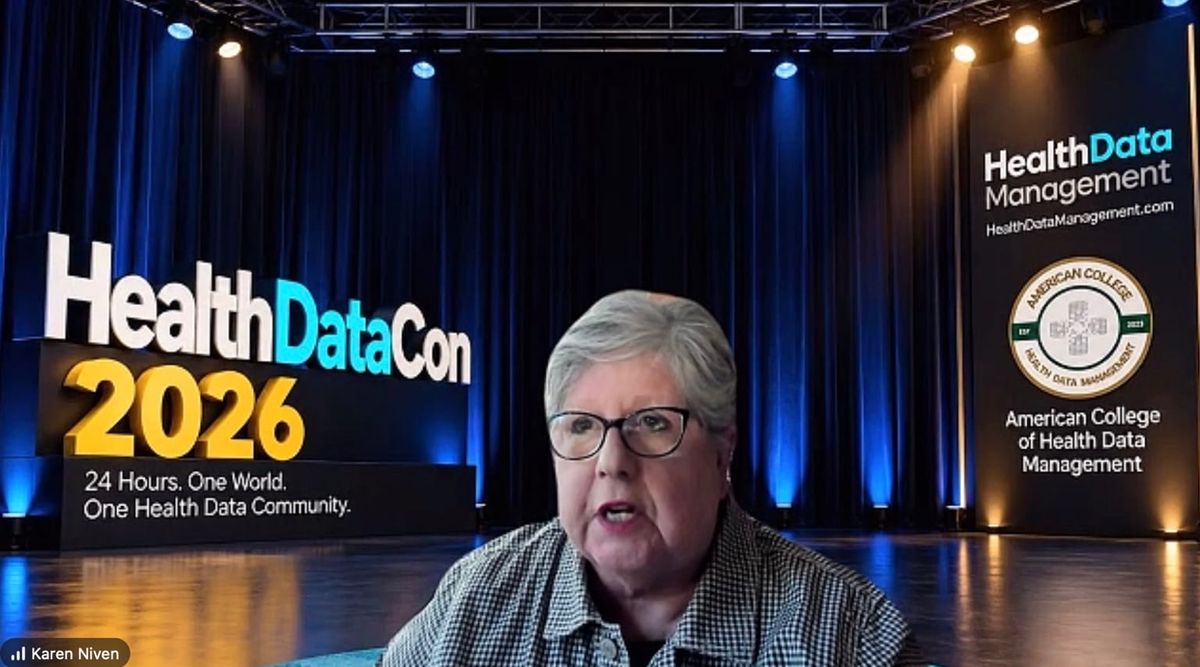
A product back order can force a hospital to change its plan. Karen Niven urged healthcare leaders to begin that response by defining the patient outcome they must protect, then organizing the evidence, people and resources needed to deliver it safely.
Speaking at HealthDataCon 2026, Niven, senior director of clinical value analysis at Premier, used Apollo 13 to examine leadership when familiar processes and dependable supplies suddenly become unavailable. Her session, “Failure Is Not an Option: Mission-Critical Leadership Lessons from Apollo 13 for Healthcare Value Analysis,” connected mission control to decisions about shortages, product substitutions, clinical readiness and organizational risk.
Her instruction to participants was “application, not admiration.” Keep a real organizational challenge in mind, she said, and consider how the team would respond when its original plan stopped working.
Protect the outcome as the plan changes
Apollo 13 supplied the central lesson. After an oxygen-tank failure, the lunar landing mission became an effort to return three astronauts safely to Earth. NASA’s account describes how controllers and crew conserved resources and adapted equipment, including connecting incompatible carbon-dioxide-removal canisters using materials aboard the spacecraft.
“It was no longer getting to the moon and back,” Niven said. “It was to get those astronauts home.”
The session’s title echoed the famous line from the Apollo 13 film, whose cinematic origin astronaut Fred Haise acknowledged in a NASA interview. Niven’s healthcare application centered on the work behind that resolve: recognizing changed conditions and redefining what success requires.
For value analysis, she proposed a direct starting question: “What outcomes do we protect?” A recall, shortage or proposed product change should prompt scrutiny of patient safety, clinical outcomes, staff safety and reliable care delivery.
Stewardship belonged in that assessment, too. Drawing on her experience managing operating rooms, Niven described helping staff understand the resources required to deliver care. She linked reducing waste and understanding costs to preserving the organization’s ability to meet patient needs over time.
She described a physician who asks newly arriving colleagues whether their product preferences improve patient outcomes. That question makes the reasoning behind a preference visible. Niven’s emphasis also aligns with AHVAP’s position that value analysis standards should support safety, care quality and communication across systems.
Make calmness a team capability
“Calmness is a leadership system,” Niven said. She illustrated the point through an anesthesiologist who could reset priorities during difficult clinical situations while keeping colleagues focused and inviting their ideas.
His contribution extended beyond his own composure. He created conditions in which others could think, distinguish important information from distractions and respond as the patient’s needs changed.
That requires structure. Niven emphasized gathering clinical, operational and financial evidence and involving the people whose expertise will shape the decision. Infection prevention, biomedical engineering, finance, risk management, clinicians and supply chain each bring information that another function may miss.
Her metaphor was a dinner invitation: bring those colleagues into the conversation at the beginning, while the team is still considering its options. Waiting until the decision is nearly finished can leave important risks undiscovered and force work to be repeated.
The approach is consistent with the Agency for Healthcare Research and Quality’s TeamSTEPPS guidance, which assigns leaders responsibility for clarifying goals, distributing tasks, sharing information, modifying plans and supporting a psychologically safe learning environment.
Niven also defended checklists as protection against skipped steps. Familiarity with a task can make an omission seem harmless until the omitted step becomes habitual. Her formulation was concise: “Speed is removing confusion between the steps.”
Separate product availability from clinical readiness
For a critical back order, Niven urged organizations to establish what they actually have, where it is located, how quickly it is being used and which procedures and sites depend on it. Inventory dispersed across units and facilities can obscure the resources available to the wider organization.
That assessment should include practical details such as sizes, quantities and the locations requiring supply. It should also identify the greatest risk to the patient or workflow before the team settles on an alternative.
“Avoid treating procurement speed as clinical readiness,” she said.
A quickly sourced replacement still requires assessment of clinical evidence, instructions for use, training needs and workflow implications. Teams also need communication and monitoring plans, including a signal that would trigger reconsideration or stopping. The procurement decision is one part of that work.
Constraints can prompt useful problem-solving when the team examines what it can safely accomplish with available resources, Niven said. The shift requires a clear view of the care needed and the limitations of each option. It also requires including the clinicians who will use the alternative.
Niven’s account of a missing implant brought the consequences into focus. A colleague was called to a patient’s bedside after the product needed for a planned procedure failed to arrive. The family’s response, as Niven recalled it, was devastatingly simple: “You knew we were coming.”
The story underscored her insistence on looking backward through the supply chain from the bedside. A patient experiences the result of many sourcing, logistics and readiness decisions, even when those decisions remain invisible.
She also pressed teams to examine the total cost of care. A product’s purchase price alone does not capture its effect on workflow or outcomes. A Premier article coauthored by Niven similarly calls for considering ownership costs, patient experience, safety and outcomes when working with suppliers.
Give teams permission to say “not yet”
Shortages were only one setting for the leadership model. Niven also considered an attractive new product with strong advocates but incomplete evaluation, training or operational preparation.
In that situation, she said, leaders must be willing to say “not yet.” Enthusiasm cannot establish that a team is ready to use a product safely. Completing the evaluation also demonstrates that the organization takes clinical evidence, operational effects and patient safety seriously.
Niven asked participants to examine biases that can distort those decisions: attachment to an initial opinion, selective attention to supporting evidence, deference to authority, sunk costs and pressure to reach agreement. Recognizing those influences gives a team a chance to question its own reasoning.
During the audience discussion, she was asked how leaders know they have enough reliable information to act during an urgent shortage. She recommended independently searching credible evidence sources, considering the strength of the evidence and using the judgment of the full team, including risk specialists involved from the outset.
She offered no universal numerical threshold for proceeding. Her answer placed responsibility on a collective assessment of whether the available product and proposed approach could support the care required.
Turn each disruption into reusable knowledge
Niven’s proposed value analysis dashboard began with the outcome to protect and the evidence supporting the decision. It would also make ownership visible: who acts, who communicates and who monitors the result.
Other questions concerned potential harm, care disruption, viable alternatives and signals that conditions were changing. Those elements help teams maintain a shared understanding while the situation develops.
She connected that visibility to huddles, check-backs and debriefs. AHRQ’s check-back tool provides a concrete communication method: the recipient acknowledges and verifies the information, and the sender confirms that it was understood correctly.
After a disruption, Niven recommended an event review or after-action discussion to capture what the team learned and what it missed under pressure. Reviewing the response can also reveal opportunities to improve the next one.
Throughout the session, value analysis served as the connection among these functions, keeping evidence, availability, logistics and clinical requirements in the same conversation. Shared leadership made those different perspectives available to the people responsible for acting.
Her closing message located value analysis in the experience of people who may never meet its practitioners: “Patients may never know your name, but they will feel the impact of your decisions.”