Amazon puts routine patient calls in an AI agent’s hands and measures who stays on the line
AWS cited a 30% drop in abandoned calls after UC San Diego Health automated identity checks. Amazon’s clinical AI chief described a different test for software that recognizes a possible emergency.

For a patient calling a health system, a minute spent verifying an identity can be the difference between reaching someone and hanging up. Naji Shafi, general manager and director of healthcare AI at Amazon Web Services, said UC San Diego Health redirected 630 hours of staff time a week after automating that step. His preferred measure of the change was what callers did next. The system reported a 30% reduction in call abandonment, meaning more people stayed on the line long enough to get help.
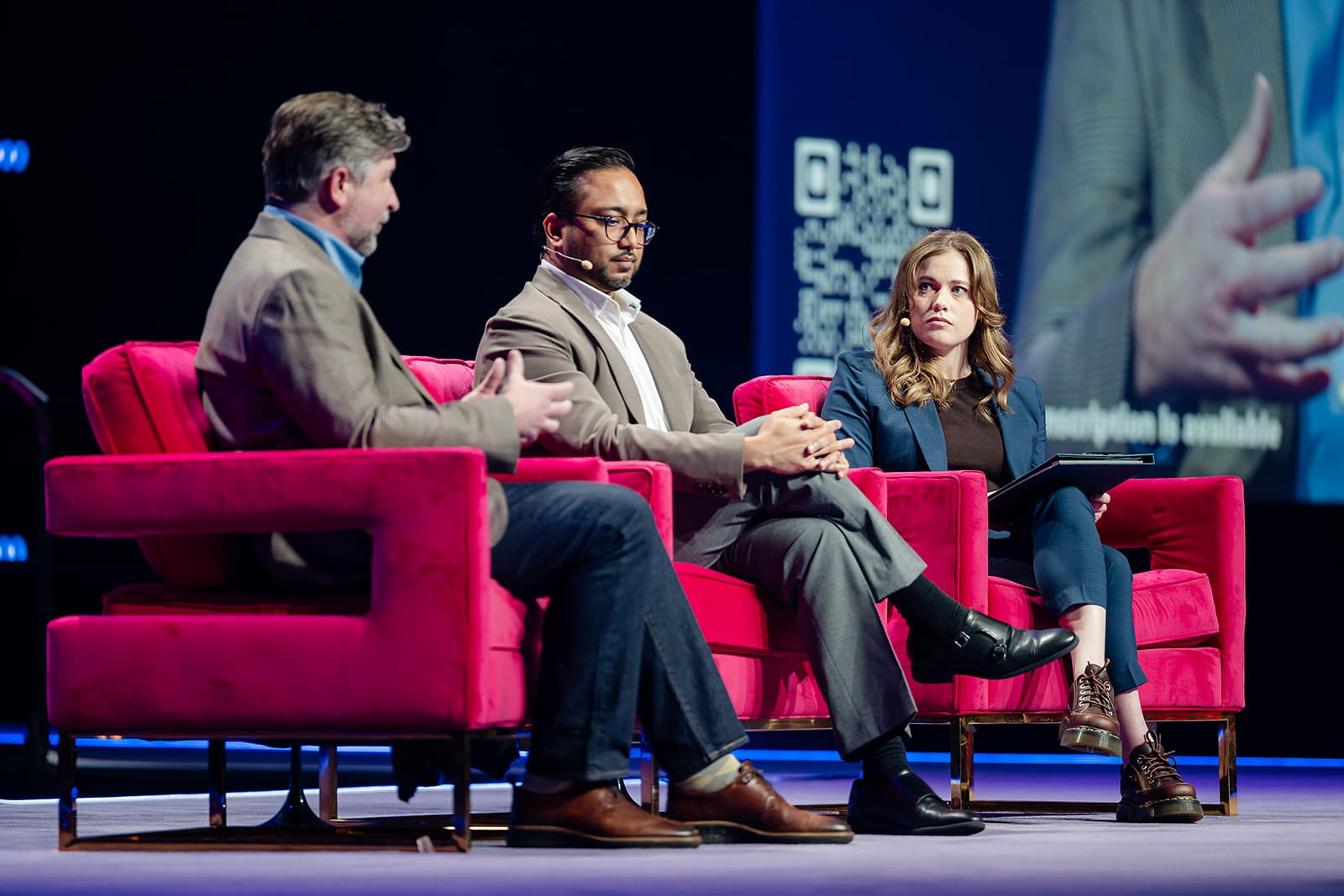
Shafi described those results while announcing an AI agent that he said can handle a range of routine patient requests by phone at any hour. He and Dr. Will Kimbrough, chief clinical AI officer at Amazon Health Services, spoke with Newsweek health care editor Alexis Kayser in a Nov. 17 Main Stage interview in Las Vegas. The San Diego figures apply to an earlier deployment for patient verification. The speakers presented them as evidence for starting with a well-defined task as Amazon expands into calls where the request and the risk can change midconversation.
Shafi said health systems tell AWS that as many as 60% of their calls concern routine matters. Someone wants an appointment, needs help accessing the portal or is trying to find out whether an office is open. The estimate came from customers. What counts as routine can also depend on when someone asks. A caller seeking a refill may simply need the request forwarded, or may have run out of a medicine and have a question that requires a clinician.
What San Diego measured
UC San Diego Health began with an administrative step that almost every patient recognizes. Staff had been spending part of each call finding the right record and checking the caller’s identity. In the initial deployment, the automated service performed that check before transferring the caller to a person. The patient still had someone to talk to about scheduling or another need. The employee could begin with that question instead of repeating the identification process.
The health system’s chief information officer, Joshua Glandorf, described the rollout in March. Saving roughly a minute on what had been a four-minute call represented about a quarter of the average handling time, he said. AWS’s customer account describes 3.2 million patient interactions annually at the system. Those figures explain how a small gain on an individual call can release a substantial amount of staff time across a week. They establish much less about what ultimately happened to the people who called.
Shafi asked prospective buyers to start with two questions. “What changes do I need to make?” was the first. “How will I measure the results?” was the second. He also urged them to decide how soon they could reasonably expect to see a change. A department with reliable figures for hold times, transfers and abandoned calls can compare those measures after rollout. To know whether more people actually secure an appointment, it would also need to follow the request to its disposition.
It matters which capabilities a health system turns on. The call-routing guide describes verification before an agent can share patient information or carry out a task involving a record. General information, such as opening hours, can be supplied without that step. The guide also describes transfer to a person when a caller requests one or the agent cannot complete the task. Sending the reason for transfer along with the caller is part of the design. From the patient’s perspective, that detail determines whether the next conversation begins where the first one ended.
Who decides when a patient needs a person?
Kimbrough described a separate service, Amazon’s patient-facing Health AI assistant. The AWS product is sold to healthcare organizations for functions such as answering calls. Health AI can help an individual navigate care and connect with the One Medical clinical team. The two Amazon groups share design experience, Shafi said, although One Medical has its own engineering and research teams. A result from one service does not establish the accuracy of the other.
“Trust and safety are the product,” Kimbrough said. He described months of testing, including attention to emergency detection, followed by monitoring and human clinical review. Involving clinicians early meant deciding what a safe conversation looks like before engineers settled on a design. Keeping them involved afterward serves a different purpose. When an underlying model changes, a system may respond differently to the same description of symptoms. Kimbrough identified “ongoing clinical evaluations” as a foundation of Amazon’s approach.
Kayser asked what that oversight looks like when a patient is tired, worried or unsure how to describe the problem. Shafi outlined several layers. Fixed rules can direct certain requests to a person or emergency services. A second AI agent can supervise a conversation while the first attends to the caller. The health system’s own policies also govern what the agent should do. He compared the arrangement to a supervisor listening to a call and said the pace of speech, pauses and interruptions all mattered when designing a voice interaction.
Kimbrough recounted one customer who lived far from a health center and initially resisted the assistant’s suggestion to seek emergency care. In his account, the customer eventually made the trip, was hospitalized for several days and returned to thank the service. The case illustrates why escalation and tone matter. A single report cannot establish how often the assistant identifies emergencies or how often it sends someone for urgent care unnecessarily. The speakers gave no sensitivity or false-alarm figures for that use.
Kimbrough also described a way patients can give the assistant additional context. With their permission, he said, outside records can be brought in through health information exchanges and other sources. That matters when a caller is considering a visit far from home. What the assistant can learn from records, and whether it can connect someone to an available clinician, are distinct parts of that decision.
That leaves two quite different standards for health systems evaluating an agent. For administrative work, a shorter call and fewer hang-ups are meaningful early measures, particularly if a clinic can also establish that callers got the service they requested. For clinical guidance, the difficult cases include the person who stops responding after receiving advice. The company may hear back from someone who went to the hospital and was grateful. It needs another way to learn what happened to the patient who hung up.
Lead and session photography by HLTH USA 2026.